
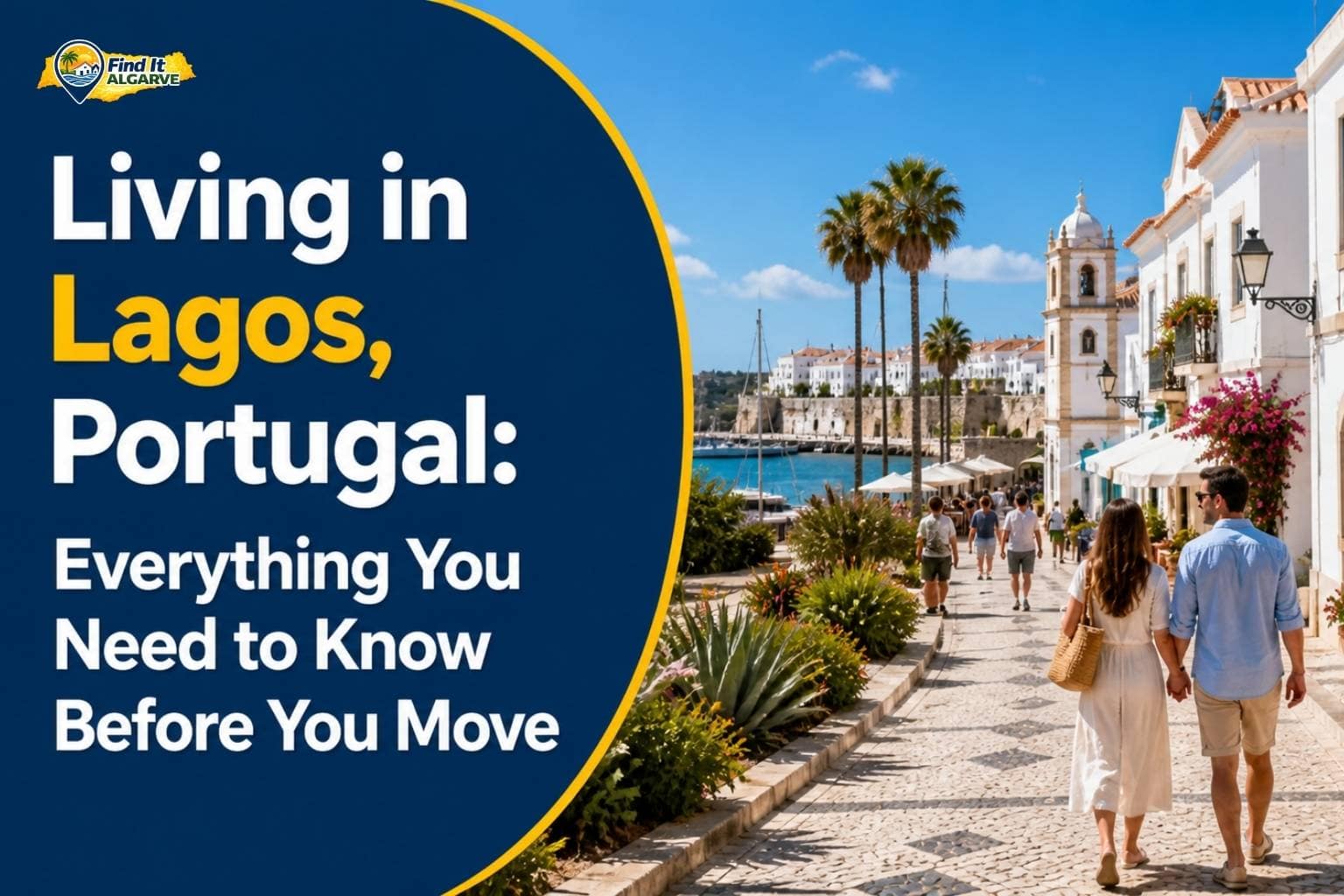
Lagos is the town that comes up more than any other when people start researching a move to the Algarve. And having spent time getting to know the western Algarve ourselves, it is not hard to understand why. It has the beaches, the old town, the community, the bars, the clifftop walks and the kind of daily life that makes people who came for a long weekend end up staying for years.
This guide covers what living in Lagos Portugal is actually like — the good, the slightly less good, and the practical things you need to know before you commit to moving here.
What kind of place is Lagos?
Lagos sits on the western edge of the Algarve, about an hour’s drive from Faro airport. It is a proper town rather than a resort, which matters more than people realise when you are thinking about where to live rather than where to holiday. It has a real centre, a working marina, a covered market, Portuguese bakeries, local schools and all the infrastructure of a place where real life happens year round.
The permanent population is around 22,000, which swells considerably in summer as the tourists arrive. In July and August the old town and the beaches are busy. Outside of those months, particularly from October through April, Lagos is genuinely relaxed and the pace drops to something that most people moving here are actively looking for.
The expat community is large and well established. Lagos has long attracted British and northern European retirees and in more recent years has become a destination for younger remote workers and digital nomads drawn by the combination of fast internet, reasonable costs and an outdoor lifestyle that is hard to find anywhere else in Europe at this price point. English is widely spoken in the town centre and you can get by perfectly well without Portuguese for everyday life, though learning some always helps and is always appreciated.
The beaches
The beaches around Lagos are genuinely among the best in Europe and they are a big part of why people choose to live here over other Algarve towns. Meia Praia is the long sandy beach just east of the marina, easy to reach and perfect for families. Praia Dona Ana and Praia do Camilo are the dramatic cliff-backed beaches south of town that you have probably seen in every photograph of the Algarve. Ponta da Piedade is the famous rock formation and sea cave area a short walk from town that is one of the most photographed coastlines in Portugal.
The fact that these beaches are within walking or short driving distance of where you live rather than a holiday destination you visit once a year is one of those things that takes a while to sink in once you actually move here.
Lagos cost of living
Lagos sits at the higher end of the Algarve cost spectrum, which in turn sits at the higher end of Portugal. If you are comparing to the UK, Netherlands or Germany you will almost certainly find it cheaper. If you are comparing to inland Portugal or smaller Algarve towns, you will find it more expensive.
Here is a realistic picture of what things cost in 2026:
Rent is the biggest variable. A one-bedroom apartment in the town centre runs €900 to €1,200 per month for a long-term rental. A two-bedroom apartment is typically €1,200 to €1,600. A three-bedroom house or villa with a garden starts from around €1,500 and goes up considerably depending on location and quality. Prices have risen over the past few years as demand from both expats and tourists has pushed the market up.
Groceries are reasonable. Shopping at the local Intermarché or Pingo Doce supermarkets, a couple can eat well for €300 to €400 per month. The Lagos municipal market near the marina is excellent for fresh fish, fruit and vegetables at very good prices and is worth building into your weekly routine.
Eating out in Lagos ranges from €8 to €12 for a lunch menu at a local tasca to €30 to €50 per head at the better restaurants in the evening. Coffee is €0.80 to €1. A beer at a bar is €1.50 to €2.50. The range is wide and you can eat very well without spending a lot if you eat where local people eat.
Utilities for an average apartment run around €80 to €120 per month including electricity, water and internet. Air conditioning in summer pushes electricity bills up.
A single person living comfortably in Lagos can expect to spend €1,500 to €2,000 per month all in, not including rent. A couple living a relaxed but not extravagant life might budget €2,500 to €3,500 per month including rent. Our full Algarve cost of living guide breaks this down in more detail.
Property prices in Lagos
Lagos is one of the more expensive areas in the Algarve for property, reflecting its popularity with international buyers. As a rough guide for 2026:
- A one-bedroom apartment in or near the town centre starts from around €200,000 to €280,000
- A two-bedroom apartment runs €280,000 to €450,000 depending on condition, location and whether it has outside space
- A three-bedroom villa with a pool starts from around €500,000 and rises considerably for newer builds or prime locations near the cliffs
- The Meia Praia area east of the marina has seen strong price growth and beachfront properties command a significant premium
The Boavista Golf and Spa Resort area west of town and the Meia Praia beachfront are the most sought-after locations for buyers. Our guide to buying property in the Algarve covers the full buying process and the 2026 tax changes that affect foreign buyers.
Getting around
Lagos is an extremely walkable town. The old town, the marina, the main beaches and most of the shops and restaurants are within easy walking distance of each other. For daily life in the town centre you genuinely do not need a car.
For anything outside the centre — supermarkets on the edge of town, the beaches further afield, day trips or getting to Faro airport — a car is useful. The Algarve’s public transport is limited and the train line runs east to Faro (about 1.5 hours) which is useful but does not cover the western Algarve well. Most expats living here own or hire a car. Our guide to driving in Portugal covers licences, tolls and buying a car locally.
Schooling in Lagos
For families moving with children, Lagos has both state school and private school options. The nearest international school with strong expat credentials is Nobel Algarve in Lagoa, about 25 minutes east along the coast. This is the school most English-speaking families in the Lagos area use. Our guide to international schools in the Algarve covers all the options across the region.
The Portuguese state school in Lagos is a reasonable option for families who plan to integrate fully and whose children will pick up the language, though most English-speaking families at least start with an international or private school option while the kids find their feet.
Healthcare
Lagos has a health centre (Centro de Saúde) for SNS public health access and there are private clinics in the town. For anything more serious the hospital in Portimão is about 20 minutes east and is well equipped. Most expats in Lagos have private health insurance alongside their SNS registration. Our healthcare guide covers the full picture.
The community
This is one of the things that makes Lagos stand out from other Algarve towns. The expat community here is large, active and welcoming. There are regular social events, sports groups, walking clubs, language exchanges and the kind of informal social infrastructure that means you are unlikely to feel isolated even in your first weeks. The mix of retirees, remote workers, surfers and families gives Lagos a breadth that more resort-focused towns do not have.
The bar and restaurant scene is excellent by any measure, not just for a town of this size. The old town has dozens of good options at every price point and the quality of food, particularly seafood, is genuinely outstanding.
What Lagos is not great for
It is worth being honest about this too. Summer in Lagos is busy. July and August bring significant numbers of tourists and the town centre, the beaches and the roads can feel crowded. If you are sensitive to noise and crowds during the peak months it is worth spending time here in summer before you commit to moving.
Property and rental prices are higher than many other Algarve towns. If budget is your primary concern, towns further east like Tavira, Olhão or Portimão will give you more for your money. Lagos commands a premium for the beaches, the community and the lifestyle, and that premium is real.
The road connections to Faro and Lisbon run via the A22 motorway which is tolled. Factor in the tolls if you are planning to travel frequently — see our driving in Portugal guide for how the toll system works.
Is Lagos right for you?
Lagos suits people who want a proper town with a real community rather than a resort. It suits people who value outdoor life, beaches and the western Algarve’s wilder coastline. It suits remote workers who want good internet and a social scene alongside a beautiful place to live. And it suits retirees who want an active, English-friendly expat community with excellent weather and accessible beaches.
It suits less well if your priority is keeping costs as low as possible, if you need to be very close to Faro airport regularly, or if you find busy summers disruptive.
If you are still comparing towns, our guide to the best places to live in the Algarve covers Lagos alongside Tavira, Vilamoura, Faro and the other main options and will help you work out which part of the region fits your situation best. And if you are at the stage of planning the move itself, our complete relocation guide and D7 visa guide cover the practical steps.